

By Andrew Munialo
Many youth in agriculture have failed to access finances. And yet access to affordable finance allows youth and young women to invest in productive enterprises, strengthen household incomes, and contribute to the growth of local agricultural value chains.
Although some institutions are hesitant to support the youth, the Stimulating Agribusiness for Youth Employment (SAYE) program under HEIFER International has crafted a plan that will enable the young people to access finances.
Working with ASIGMA and consortium partners such as the Federation of Small and Medium Enterprises, FSDU and CURAD, youth in agribusiness can now access funding. At the start, the initiative will benefit youth mainly from Busoga Subregion.
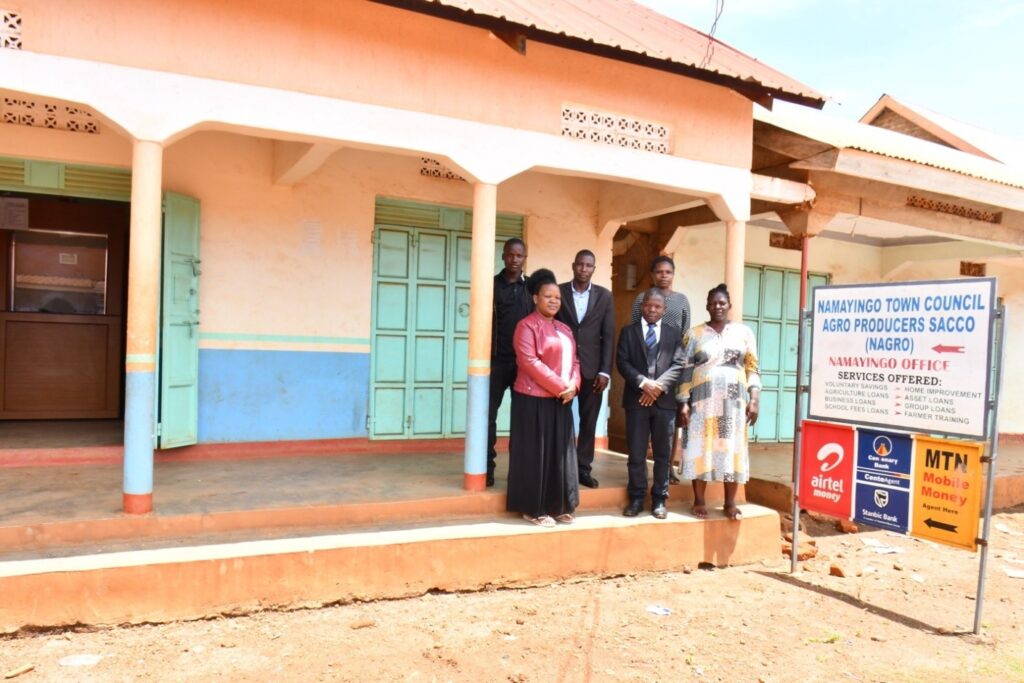
According to HEIFER, for the youth to access the funds, they will have to work with SACCOS in their locality, through which the funds will be channeled. From preliminary assessments and rigorous screening, followed by a detailed due diligence, NAGRO SACCO in Namayingo District is one of the SACCOs in Eastern Uganda that ASIGMA has supported through onboarding to access the SAYE Credit Fund.
The implementation was carried out alongside institutional capacity building to on-lend to youth groups engaged in agriculture and allied value chains. To date, ASIGMA has boarded 9 SACCOs and funded 5 SACCOs under the program.
To date NAGRO, with training support from SAYE, has developed youth-focused financial products that are enabling young farmers to access finances and invest in crop production and expand their enterprises.
How are the youth are onboarded?

Herbert Namukoota, the manager NAGRO SACCO,Namayingo district.
SACCOS such as NAGRO SACCO was identified through a structured appraisal process and as a result, accessed support from the SAYE Credit Fund, through ASIGMA’s fund management function, for lending out to youth and youth groups in agribusiness, explained Herbert Namukoota, the manager NAGRO SACCO.
“The SAYE Program came when we needed it the most. The demand for the money from youth was there, but our capacity was low. ASIGMA’s role extended beyond funding into institutional strengthening, improving internal systems and staff confidence, Namukoota said.
He added that with the funding, over 200 young people within two months. In addition, financial literacy support provided through the SAYE program has strengthened both SACCO operations and youth preparedness to manage loans.
“Through the training sessions, the ASIGMA team helped us improve reporting, monitoring, and loan management. We were trained to do it better. Currently, we form groups based on trust, attendance, time management, and repayments. That is why defaulting has not been a problem,” added Lydia Nambogwe, board chair NAGRO SACCO
Under NAGRO SACCO, 254 project participants have benefited of which 71% are young women.
About the SAYE Credit Fund
The SAYE Credit Fund was designed to respond to constraints affecting youth participation in agribusiness, recognising that the challenge is not only access to capital, but access to financing that is structured around agricultural value chains.
By linking skills development with appropriately designed financial products, the fund enables young people to invest in productive activities and transition into more sustainable income-generating enterprises.
Furthermore, the Fund was designed to facilitate group-based lending without traditional collateral, enabling youth-specific loan products at subsidized interest rates – particularly the last-mile person.
The design of the SAYE Credit Fund in partnership with Heifer International reflects ASIGMA’s mission to build sustainable, practical solutions that create lasting impact.
As the SAYE Program continues to grow, this milestone represents only the beginning of a scalable and transformative journey toward youth financial inclusion. With ASIGMA already partnering with five additional SACCOs, the program is laying the foundation for a strengthened youth responsive finance ecosystem that expands access to tailored credit, reinforces institutional systems, and enables the onboarding of many more SACCOs to support thousands of young people tap into sustainable agribusiness opportunities.
This expansion is fully aligned with the Program overarching goal of empowering more than 250,000 young people (with a focus of 70% female) to secure decent and dignified employment through agribusiness enterprise development by the end of 2028.
