
MAAIF shows farmers benefits of paying for FMD vaccinations
Admin.
With less than two weeks to the start of the nationwide vaccination exercise against Foot and Mouth disease (FMD), the Ministry of Agriculture Animal al Industry and fisheries continues to explain to farmers why they should pay for vaccination.
Paying for vaccination is one of the initiatives under the Prevention and Cost Recovery Scheme, being piloted by the Ministry. Dr. Ben Ssenkeera, the National Coordinator for Foot and Mouth Disease Control explained that the programme is designed to establish a sustainable financing mechanism for continuous disease control while maintaining Government support for vaccination service delivery.
Under the scheme, the Government will continue to finance vaccine storage, transportation, cold chain management, supervision, monitoring and administration of vaccines, while farmers should pay vaccination fees for their animals. For cattle and pigs, a farmer is required to part with sh8,000 per and sh4,000 per dose for goats and sheep.
Ssenkeera further informed farmers that vaccination is not merely a disease-control measure but an investment that can protect livestock from disease, leading to continued earnings from milk, meat, hives and skin and related livestock products.
“Vaccinated animals are healthier, more productive and less likely to suffer the severe production losses associated with FMD outbreaks, including reduced milk production, weight loss, infertility, poor growth rates and mortality among young stock,” Ssenkeera explained further.
The farmers were also sensitized on the ongoing registration and onboarding process, which aims to establish a national livestock database to support disease surveillance, vaccination planning, traceability and issuance of vaccination certificates.
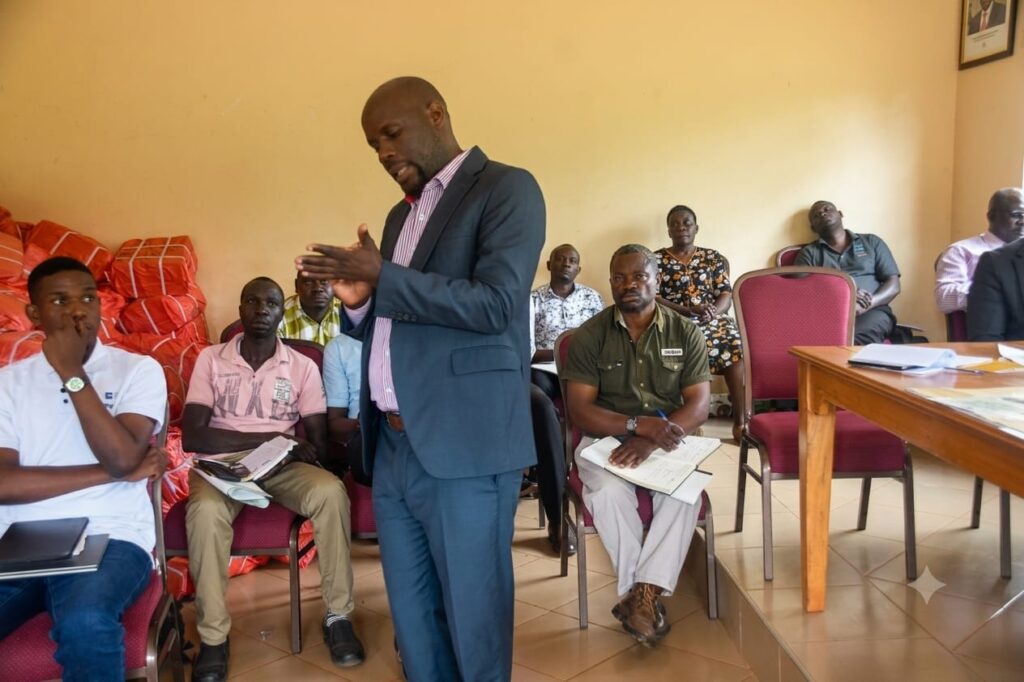
He made the explanation on Tuesday during a sensitization meeting of farmers in Bukiwe district, as part of a nationwide sensitization campaign being undertaken by MAAIF ahead of the July–August 2026 national FMD vaccination exercise.
The campaign seeks to mobilize livestock farmers and other stakeholders to participate in the programme and contribute to the collective effort of controlling FMD in Uganda.
The engagement , which was led by the Assistant Commissioner for Animal Production, Dr. Alex Mukasa, attracted participants such as livestock farmers, local leaders, veterinary personnel and other stakeholders to discuss practical measures for controlling FMD and preparations for the forthcoming national vaccination campaign under the FMD Cost-Recovery Scheme.
Mukasa emphasized that FMD remains one of the most economically damaging livestock diseases in Uganda, affecting cattle, goats, sheep and pigs. He added that outbreaks continue to undermine livestock productivity, disrupt animal trade and movement, reduce household incomes and limit Uganda’s competitiveness in regional and international livestock markets.
He appealed to farmers to embrace preventive disease control measures, particularly vaccination, biosecurity and prompt reporting of suspected disease cases.
Ends