

By P.Nalyaka
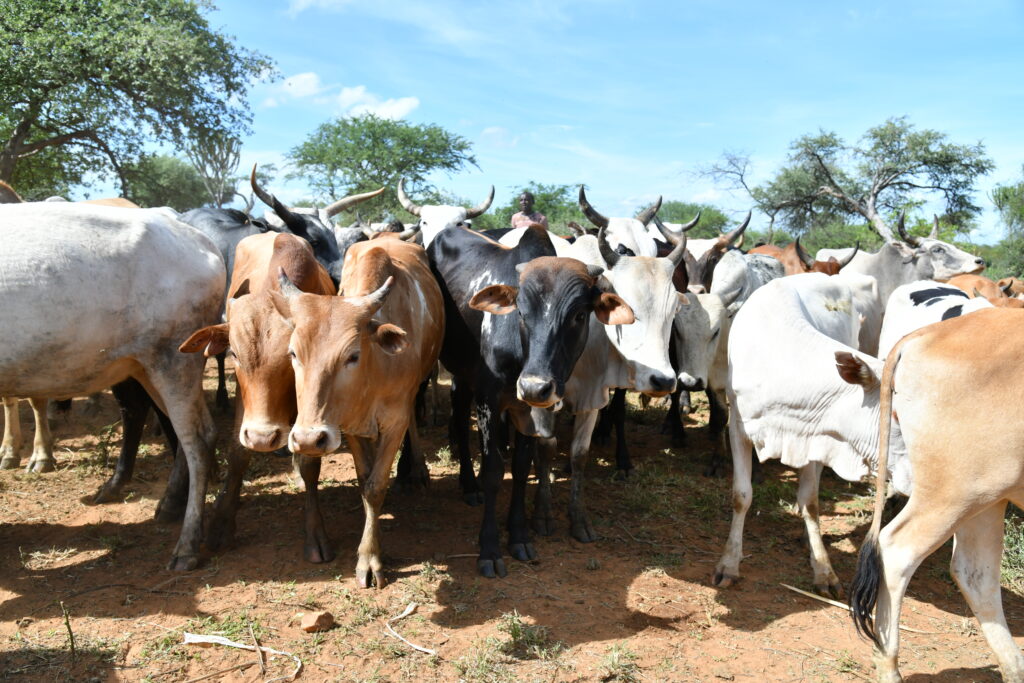
In Uganda, livestock is more than an animal in the kraal. Whether it’s a cow, goat or sheep, a farmer looks at every animal as a source of basic needs such as school fees, medical fees, income earner, gift in case of marriage ceremonies among others.
Unfortunately, this livelihood is threatened by the Foot and Mouth Disease which when it strikes, the entire household is affected.
Among life threatening livestock diseases is Foot and Mouth Disease, because it’s a highly contagious viral disease that attacks cloven-hoofed animals, including cattle, goats, sheep, pigs and several wildlife species.
When affected, the cow develops fever, mouth wounds, excessive salivation, lameness from wounds between the hooves, and wounds on the teats making it hard for the cow to be productive.
To a farmer, the biggest loss is apart from incurring the cost of treating a sick animal, his income also disappears especially when quarantine is imposed.
“During an outbreak, animals may not be moved freely, livestock markets may be closed, slaughter may be restricted, and milk collection and trade may be disrupted. A farmer may have animals ready for sale but cannot sell them. A family may have milk but fail to access the usual market. Traders, transporters, processors, local governments and consumers all feel the impact,” explained Dr Anna Rose Ademun, Commissioner Animal Production and Health in the Ministry of Agriculture Animal Industry and Fisheries (MAAIF).
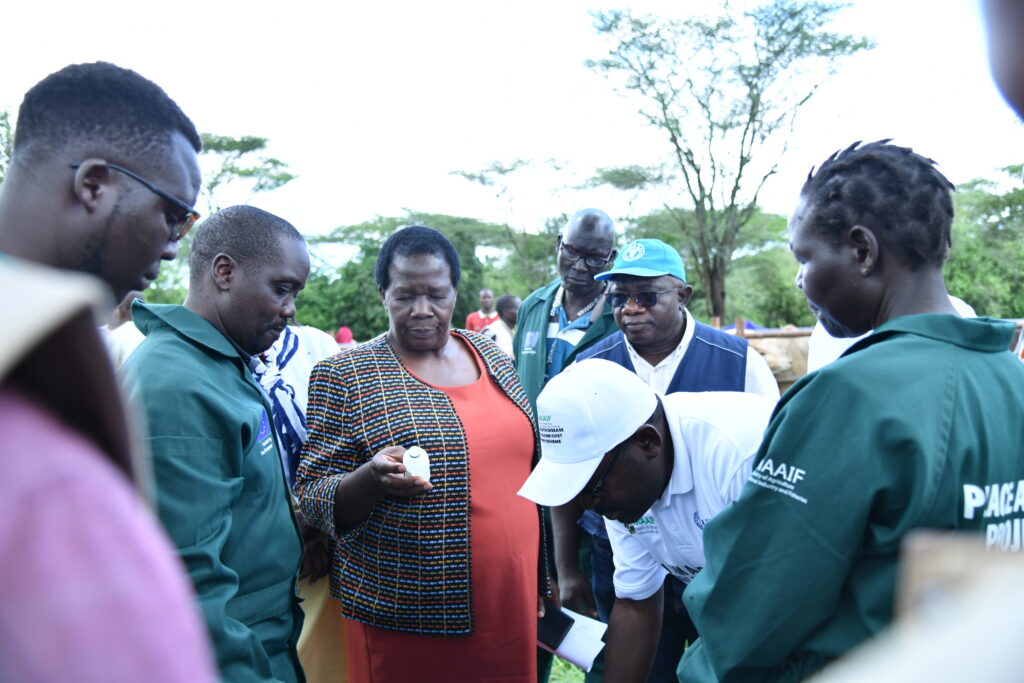
Dr Anna Rose Ademun (Middle) examins one of the vaccines being adminsitered to livestock during one of her monitoring vaccination in Karamoja sub region
Described by the World Organisation for Animal Health , as a disease with a major economic impact, because it reduces livestock productivity and disrupts regional and international trade in animals and animal products, if not managed it can easily wipe out Uganda’s livestock estimated at 14.66 million cattle, 17.48 million goats, 4.38 million sheep and 7.11 million pigs.
And yet the sub sector grew by 8.8% in the financial year 2024/25, contributing 4.5% to GDP. Exported value increased to sh10,078 billion from sh8,522 billion in Financial year 2023/24.
Milk production increased from 2.7 billion litres in 2020 to 5.4 billion litres in 2024. And Milk and milk product exports increased from $ 264.5 million in 2023 to $ 285.4 million in 2024.
Beef production also increased to 276,892 metric tonnes in 2024, while beef export earnings rose from USD 0.56 million in financial year 2023/24 to $1.30 million in financial year 2024/25.
“These figures are not just statistics. They represent farmers supplying milk to collection centres, young people working in transport and processing, traders buying animals, processors adding value, and Uganda earning foreign exchange. However, these opportunities can easily be undermined when FMD is not controlled,” Ademun said.
Explaining further that FMD is feared because of its effect on trade. Countries that have controlled or eradicated FMD are cautious about importing live animals and animal products from countries where the disease is circulating. This means Uganda’s ability to access high-value livestock markets depends on effective disease control, reliable surveillance, vaccination, quarantine enforcement, and proper animal movement control.
According to the Food and Agriculture Organisation, FMD causes losses through reduced milk and meat production, reproductive inefficiencies, control costs, and loss of market access. Globally, visible production losses and vaccination costs in endemic regions alone have been estimated at up to USD 28 billion annually, and the full burden is even higher when trade losses are considered.
FMD control is complicated because the virus has different serotypes. The seven known serotypes are O, A, C, SAT1, SAT2, SAT3 and Asia1. Each serotype requires a specific vaccine to provide protection, which means the vaccine used must match the circulating strains in the country or region, according to World Organisation for Animal Health (WOAH).
That is why Uganda procured FMD vaccines based on the serotypes of concern and technical guidance from competent animal health authorities. According to animal health experts, vaccination must be planned, regular and broad enough to protect the national herd.
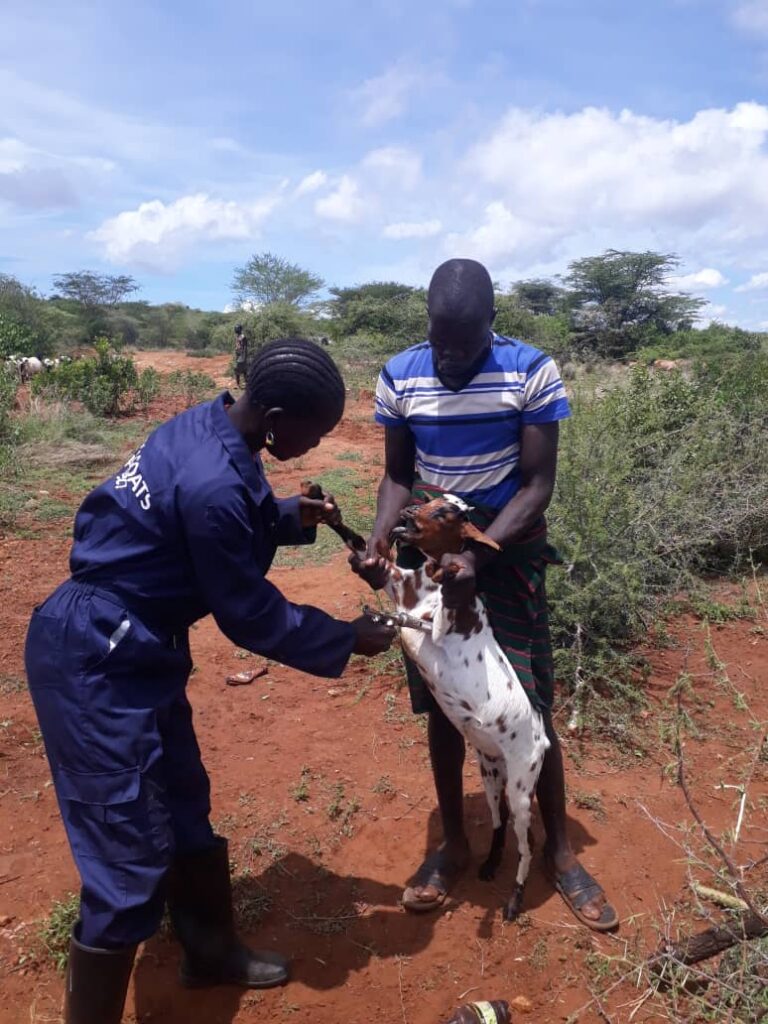
Small animals like goats will also be vaccinated against FMD between June to August 2026,according to MAAIF
The economic case for vaccination is strong. Cattle, goats, sheep and pigs support households through the sale of live animals and products such as milk, meat, offals, hides, skins, horns and hooves. When FMD occurs, the whole value chain is affected. The farmer loses income, the trader loses business, the processor loses supply, the district loses revenue, and the country loses market opportunities.
“Uganda already exports dairy products, including casein, to markets such as the United States of America, Algeria, Bangladesh, the East African region, South Sudan and the Middle East. With improved FMD control, Uganda can strengthen confidence in its livestock and animal products, protect existing markets and pursue higher value opportunities,” she added.
Through the FMD Cost Recovery Scheme, where farmers contribute towards the cost of the vaccine, while the Government continues to meet the major public costs of the programme, the plan is to vaccinate all animals in Uganda.
The approved contribution for farmers is sh8000 per dose for cattle and pigs, and sh4000 per dose for goats and sheep.
For transparency, payments are to be executed through official channels at Housing Finance Bank and Pearl Bank, from where the money will be credited into the designated government system to ensure accountability and facilitate future vaccine procurement.
Ends
